
1. The weather works with the installation, not against it
Fitting a window means the opening is exposed for a period — usually an hour or two per window on a straightforward replacement, considerably longer where an opening is being widened. In January that means heat pouring out of the house and rain blowing into the reveal. In July it means an open window on a warm day.
It matters technically as well as comfortably. Low-modulus silicone, expanding foam and external sealants all have a minimum application temperature, typically around 5°C, and they cure slower and less predictably in cold or damp conditions. Any making-good to render or plaster around a reveal dries properly in summer and can be decorated the same week rather than being left for a fortnight. A joint that cured correctly is a joint that will not leak in year three.
Structural openings are a summer job
If you are widening an opening for bi-fold doors or a sliding door, the back of the house is temporarily open while the lintel goes in. That is a manageable inconvenience in June. In December it is genuinely disruptive, and the temporary weather protection adds time and cost. If a structural opening is on your list, book it into the warm months.
2. You feel the benefit before the heating goes on
Most people think of new glazing as a winter benefit. Half of the gain is a summer one. Modern low-E double-glazed units with a solar-control coating reduce solar heat gain on south and west-facing elevations, which is the difference between a conservatory or a bedroom being usable in an August heatwave and being abandoned by two in the afternoon.
The other summer gain is ventilation control. New casements and tilt-and-turn windows let you leave a window on the night vent or the tilt position securely — locked, restricted, and impossible to open from outside. Older windows generally force a choice between stuffy and unsecured.
Then the winter benefit follows anyway. A 1995 window sits around 2.8–3.2 W/m²K; a current A-rated replacement is typically 1.2–1.4 W/m²K. Fitting in July means the first cold month of the year is the first month you are paying less to heat the house, rather than doing the work in November and only catching half a season. If you are unsure which of your windows are actually at end of life, the checklist in signs you need new windows is the place to start.
3. Access, mess and disruption are all easier to manage
Summer installations are simply less intrusive. Furniture and floor coverings can be moved out through the garden rather than around the house. Dust from cutting out old frames goes out of an open door instead of settling in a sealed room. Old frames and glass can be stacked outside for collection rather than staged in a hallway. Where scaffolding or a tower is needed for first-floor work, dry ground makes erection and removal quicker.
Gardens are also at their most forgiving. Ground is firm rather than waterlogged, so barrows and material movement across a lawn do not leave ruts, and any reinstatement to planting or paving happens in growing season.
Families with school-age children
The school holidays are a genuinely practical window for multi-day jobs. Nobody is working from home over a drill, home-schooling routines are not interrupted, and if the family is away for a week, a full-house replacement can be scheduled around it. We do a significant share of whole-house work in exactly that slot each year.
4. Security and the shape of the year
Old windows and doors fail on security in predictable ways: worn multi-point gearboxes that no longer engage smoothly, external beading on 1980s and early 1990s units, single-point patio locks, and euro cylinders with no anti-snap protection. Current specification puts all of that right — internally beaded units, laminated or toughened glass, multi-point shootbolt locking, and TS007 three-star or equivalent cylinders on composite doors.
Summer is when a house is most often open and unattended in the garden, and autumn is when opportunistic break-ins climb with the darker evenings. Doing the work now covers both. It also gives you the whole season to get used to how the new hardware operates rather than learning it in the dark.
5. Lead times, planning and getting the specification right
Made-to-measure windows and doors are manufactured after survey, not pulled off a shelf. Aluminium bi-folds, non-standard colours, shaped heads and roof glazing all carry their own lead times, and demand concentrates in late summer and autumn as people start thinking about winter. Starting the conversation early in the season means you are choosing dates rather than accepting whatever is left.
It also leaves time to specify properly rather than in a hurry. Things worth deciding without pressure:
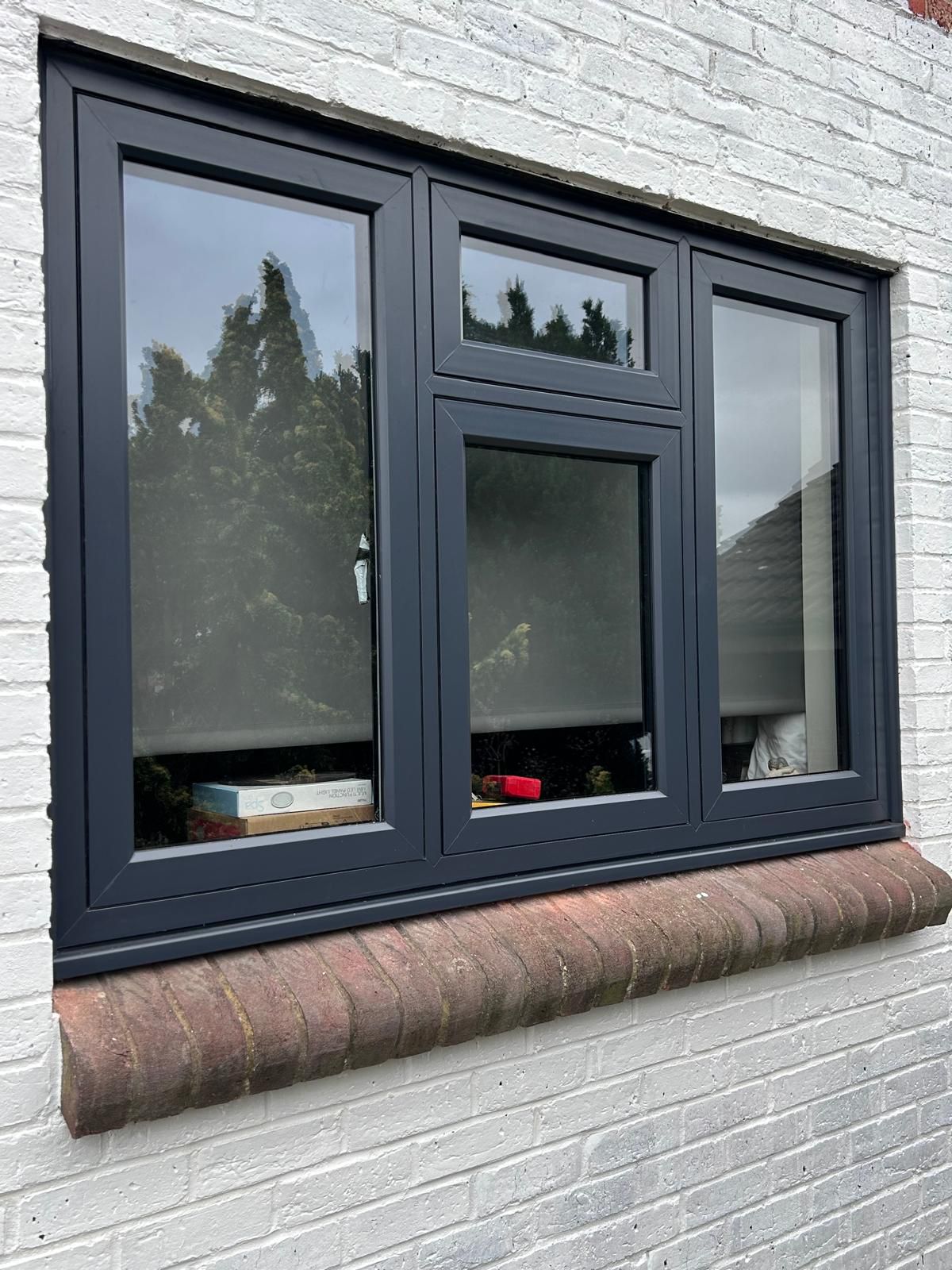
- Frame material and colour — powder-coated aluminium, uPVC, or a mix; anthracite grey outside with white inside is the most requested combination we fit in Essex.
- Glass specification — solar control on hot elevations, acoustic laminate near main roads, obscure grades in bathrooms, toughened where Part K requires it.
- Opening configuration — which casements open, where the traffic door sits on a bi-fold, whether tilt-and-turn suits an upstairs bedroom for cleaning access.
- Trickle ventilation — now required on most replacement windows under Part F, and better planned than retro-fitted.
- Building Control route — self-certified through a competent-person scheme, or a Building Control application where structural work is involved.
What the job actually looks like
A straightforward window replacement runs one to three windows a day per team, so a typical Essex semi is one to two days. A bi-fold into an existing opening is usually a single day; into a newly widened opening, three to five days including the structural work and making good. A composite front door is a half-day. Full details of how we sequence it are on the window installation process page.
Whatever the scope, the order is the same: measured survey, written quote with the specification on it, manufacture, install, adjust and demonstrate, then guarantee paperwork. We give a 10-year guarantee on products and installation, and all our fitting teams are covered by Certass.
Should you wait until winter for a better deal?
Waiting rarely pays. You lose a heating season of savings, you push the work into conditions that make sealing and drying harder, and you take the risk of weather delays on a fixed installation date. If budget timing is the constraint, that is a fair reason to wait — but weather-driven discounts are not usually the bargain they look like once you have paid an extra winter of heating bills through failed units.
If you want to know what your house actually needs, book a free survey. We will tell you which windows can wait another few years and which ones cannot, in writing, with no obligation.